ServicesRoof Treatments
Roof Moss and Algae Treatments in Scotia, NY
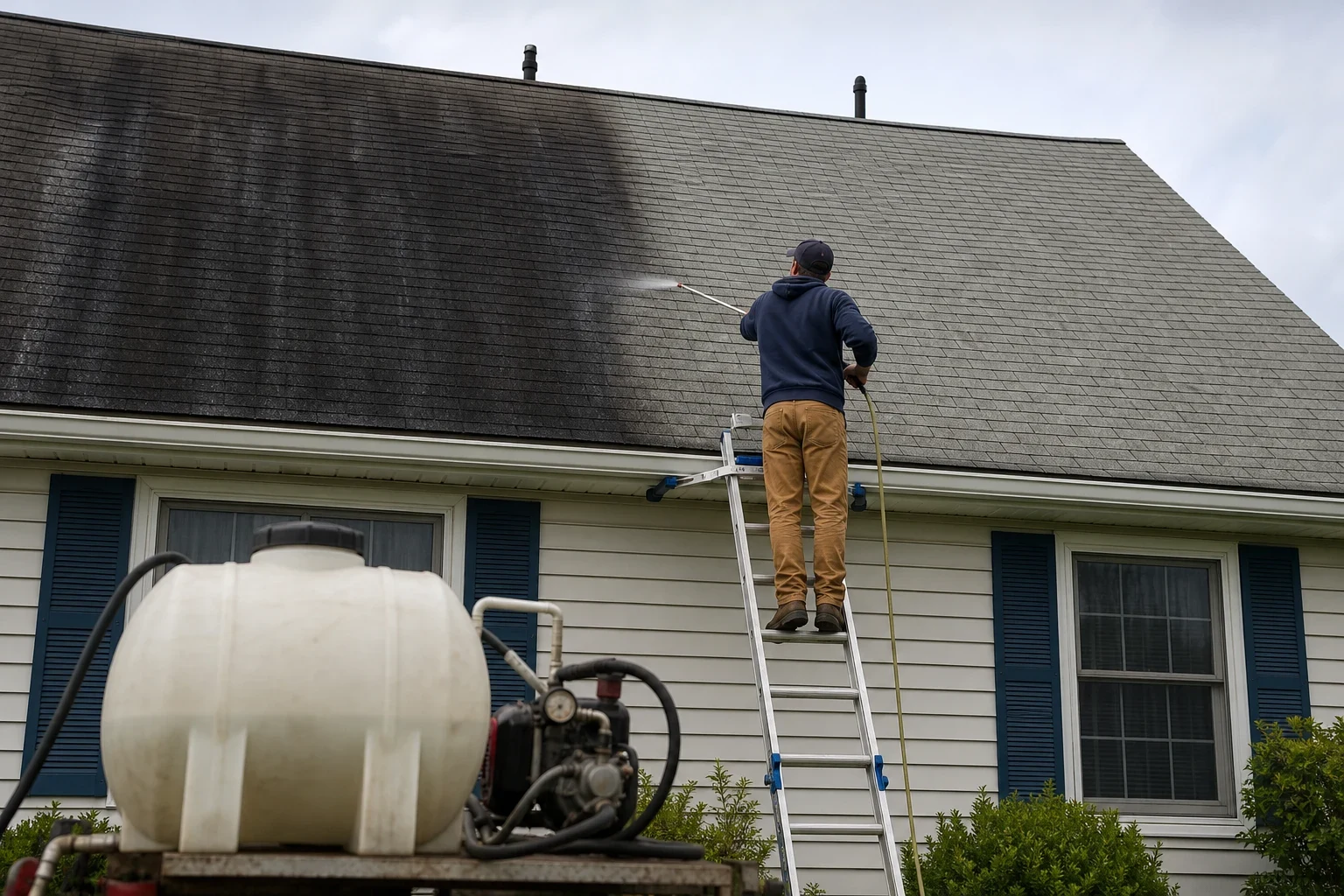
Dark streaks, moss and crusted lichen wear a roof out sooner and make the whole house look tired. We put on a mild, low-pressure treatment suited to what your roof is made of, and regular rain rinses off the dead growth over the next few weeks.
What a roof treatment does
Those dark streaks are rarely dirt. They are colonies of algae, and on asphalt shingles they live off the crushed limestone mixed into each shingle. Where a slope sits in shade most of the day, moss and lichen tend to settle in next, anchoring among the granules and keeping the surface damp well after the sunny sections have dried out.
A roof treatment is a liquid application that kills that growth where it sits. We spray it at low pressure, the same force as a garden hose, so no granules are blasted loose. Over the next several weeks, rain softens and rinses away what is left, and the treatment slows new growth from coming back.
The right mix and strength depend on what your roof is made of. Asphalt, cedar and metal each react differently, so we look at the material first and choose the treatment second.
What the work includes
- 01
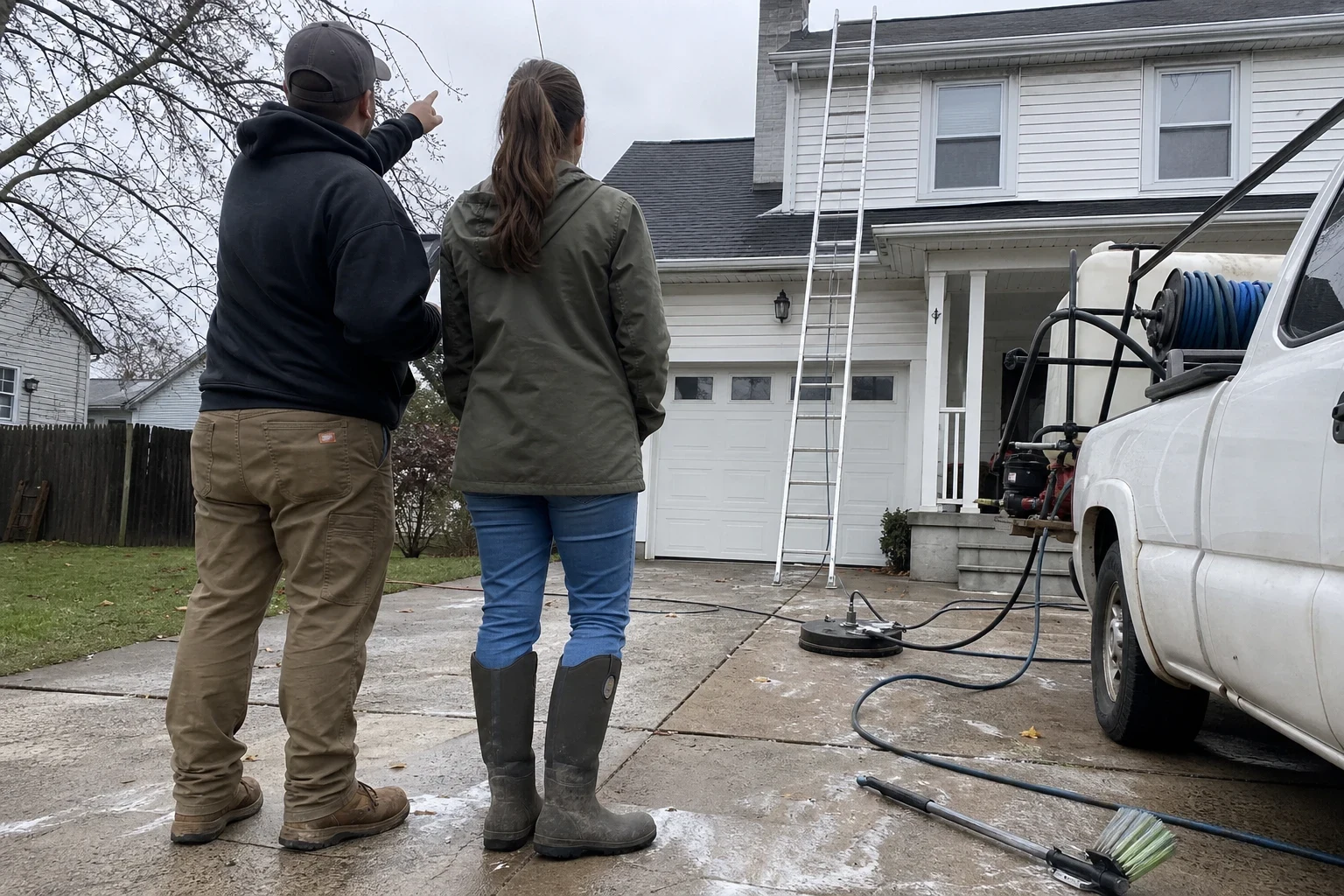
A close look at the roof surface
We check the type of growth, which slopes it favors, and how the shingles, shakes or panels are holding up. If we see loose flashing or failing shingles, we tell you before any treatment goes on.
- 02
A treatment matched to the material
Asphalt shingles tolerate a different mix than cedar shakes, which can bleach or fuzz if treated too strongly. Metal and its painted finish need their own approach. We adjust strength and dwell time to suit.
- 03
Protection for plants and siding
We wet down shrubs, flower beds and lawn edges before and after we work, and cover delicate plantings where runoff lands. Downspout outlets are watched so runoff goes where it should.
- 04
Low-pressure application only
No high-pressure spray touches the roof. That keeps the protective granules on your shingles and avoids forcing water up under the courses.
- 05
Walkaround before we leave
We rinse nearby surfaces, check the landscaping, and explain what you will see over the coming weeks as the growth fades.
Questions about Roof Treatments?
Call(518) 754-0664Signs your roof is ready for a treatment
Black or dark gray streaks
Long vertical stains running down the slope are algae. They usually start on the north side and spread a little more each year.
Green moss along shingle edges
Moss lifts shingle edges as it grows and traps meltwater, which can freeze and widen gaps through a long upstate winter.
Flat, crusty patches
Lichen looks like pale green or gray coins stuck to the surface. It grips tightly and feeds on the granules beneath it.
Granules collecting at downspouts
Some granule loss is normal with age. Heavy growth speeds it up, and a treatment can help slow that wear.
A roof that looks older than it is
If the roof is structurally sound but the color has gone patchy, a treatment often brings back much of the original look and curb appeal.
How the day runs
- 1
Quote and inspection
After you call, we look at the roof, note the material and the growth, and give you a written price. You will know what is being applied and why.
- 2
Prep around the house
On treatment day we soak plantings, cover anything sensitive near the drip line, and set up ladders with pads so gutters and siding are not scuffed.
- 3
Application
We apply the treatment slope by slope at low pressure, working from the top down. Most homes take a few hours, depending on size and pitch.
- 4
Rinse and review
We rinse landscaping and nearby surfaces again, then walk the property with you.
- 5
The weeks after
Dead moss and lichen loosen and wash off with normal rainfall. Heavier growth may take a full season to clear, and we will tell you up front if yours is likely to.
What the price depends on
We price each roof separately, once we have looked at it. Your written quote is based on how much roof there is, how easy it is to get to and how much growth needs treating. After you accept the price, it stays the same on treatment day.
- How big and steep the roof is
- More roof takes more treatment and more ladder time. Steep pitches need extra fall protection and slower work, and both are built into the quote.
- What the roof is made of
- Cedar and aging shingles need a softer, slower method than newer asphalt. On metal it depends on the finish.
- Amount of growth
- A thin algae film takes less work than dense moss or lichen that has built up over years.
- Reach and what surrounds the house
- Second-story walls, close property lines, trees over the roof and thick beds along the foundation all mean more setup and protection.
Common roof treatment questions
Is the treatment bad for my lawn or plants?
We soak plants before and after we apply it and cover delicate beds below the drip line. Wet foliage thins out any runoff. Most homeowners notice no difference in their yard.
When will the streaks and moss disappear?
With ordinary rain, algae streaks tend to fade in a few weeks. Moss and lichen cling harder, so they take longer, and thick growth may need a whole season of weather to go.
Can cedar shakes be treated?
Yes, using a gentler mix and close attention to dwell time. Cedar is softer than asphalt and can change color under a harsh treatment, so on older wood we try a small patch first.
Do you treat roofs in the winter?
It works best above freezing with dry weather ahead. Around here that generally means mid-spring into fall. We plan around the forecast instead of forcing a job into the cold.
How often will my roof need this?
That depends on shade, trees and which direction each slope faces. Plenty of roofs go a few years between treatments, while shaded north slopes can need it sooner. We give you a straight answer for your roof at the inspection.
See what your roof calls for
Let us know what you have noticed on your roof, and we will book a time to look at it. You get a clear written price before anything goes on the calendar.